
The Central Asian Flyway (CAF) is a vast migratory corridor stretching across 30 countries of North, Central and South Asia and the Trans-Caucasus, connecting the Arctic and Indian Oceans. It encompasses some of the world's most important routes for migratory waterbirds, landbirds, and raptors, many of which are threatened or declining.
After nearly two decades of international negotiations, the 14th Meeting of the Conference of the Parties to CMS (COP14, Samarkand, February 2024) formally established the Initiative for the Central Asian Flyway under CMS Resolution 14.13. This decision created a new institutional framework under CMS to coordinate conservation action for all migratory birds and their habitats across the flyway region, supported by a Coordinating Unit hosted by the Government of India.
- The CAF Initiative – Mandate & Scope
The CAF Initiative was formally established by CMS Resolution 14.13 and provides the first comprehensive institutional framework protecting all migratory birds across the CAF region covering waterbirds, landbirds and raptors.
Geographically, the CAF covers:
37 Range States across North, Central and South Asia and the Trans-Caucasus and 587 species belonging to Appendix I and II of the CMS Species List
The CAF encompasses the migration routes and the breeding grounds in Siberia (Russian Federation) to the wintering grounds in West and South Asia, the Maldives and the British Indian Ocean Territory
It is also worth noting that the CAF overlaps with many other CMS Agreements and instruments, such as the AEWA Agreement Area (16 of 30 CAF countries) the Raptors MOU, and AEMLAP[KS1] . and the East Asian–Australasian Flyway (5 eastern countries)
- What we do – Programme of Work
Under CMS Resolution 14.13 and the CAF Programme of Work, the Initiative works to:
Update and implement the CAF Action Plan for the Conservation of Migratory Waterbirds and their Habitats (originally adopted in 2008), expanding it to cover all migratory bird groups
Coordinate conservation action for priority species, including those listed under CMS Appendices I and II
Support Range States in implementing national and flyway-level conservation measures for migratory birds and their habitats
Foster international cooperation and synergies with AEWA, the Raptors MOU, AEMLAP, the East Asian–Australasian Flyway Partnership (EAAFP), and other relevant instruments
Establish and maintain a network of critical sites across the flyway for landbirds, raptors, and waterbirds
Build capacity in Range States for monitoring, research and conservation of migratory birds
Engage local communities and Indigenous peoples in flyway-scale conservation
- Priority Species – Suggested Addition
The CAF region is home to some of the world's most threatened migratory birds. Among the species for which the CAF Programme of Work is of greatest significance are:
Siberian Crane (Leucogeranus leucogeranus) – Critically Endangered – CMS Appendix I & II
Sociable Lapwing (Vanellus gregarius) – Critically Endangered – CMS Appendix I
Asiatic Dowitcher (Limnodromus semipalmatus) – Near Threatened – CMS Appendix II
Black-necked Crane (Grus nigricollis) – Near Threatened – CMS Appendix I & II
Indian Skimmer (Rynchops albicollis) - Prioritised for listing and development of a single species action plan [SSAP] as per UNEP/CMS/Resolution 12.12 (Rev.COP15). Yet, not listed in the CMS Appendices till present
Spot-billed Pelican (Pelecanus philippensis) – Near Threatened – Prioritised under Species That Meet the Criteria for Listing on CMS Appendices (Resolution 14.20 (Rev.COP15) – Yet not assigned to any CMS Appendices
Bar-headed Goose (Anser indicus) – representing unique high-altitude Himalayan migrations – Least Concerned – CMS Appendix II
Great Bustard (Otis tarda) – threatened Asian populations; action plan adopted at COP14 – Endangered – CMS Appendix I & II
A full list of priority species and populations is provided in the CAF Action Plan and updated CAF Situation Analysis 2023.
- History and Background
From Action Plan to Initiative:
2001 – First Range States Meeting (Tashkent, Uzbekistan)
CMS convened at the first meeting of CAF Range States in Tashkent to discuss a draft action plan and explore legal and institutional options.
2005 – Second Range States Meeting (New Delhi, India) — CAF2
The second meeting, attended by delegates from 23 of 30 Range States and nearly 100 participants, broadly agreed on the content of the Central Asian Flyway Action Plan to Conserve Migratory Waterbirds and their Habitats. The meeting was organized by CMS in cooperation with Wetlands International and hosted by India's Ministry of Environment and Forests.
2008 – Adoption of the CAF Action Plan
Following technical consultations, the CAF Action Plan was formally adopted in January 2008. Developed with technical support from Wetlands International, it covers 175 species across 30 Range States and provides the basis for individual and coordinated region-wide conservation activities. It remains the foundational planning document for the CAF region.
2012 – Third Range States Meeting (Abu Dhabi, UAE) — CAF3
CMS convened a third negotiation meeting in December 2012 to agree on a preferred legal and institutional framework for CAF. Range States adopted a declaration indicating a preference for incorporating CAF into the African-Eurasian Waterbird Agreement (AEWA), which would have required extending AEWA's geographic scope.
2020 – COP13 Decision 13.46 (Gandhinagar, India)
At COP13 in Gandhinagar, India, CMS Parties adopted Resolution 12.11 (Rev.COP15) on Flyways and Decision 13.46, mandating the establishment of an institutional framework under CMS to support conservation action for migratory birds and their habitats in the CAF region by COP14. Range States were called upon to collaborate with the Government of India and the Secretariats of CMS and AEWA to achieve this goal, and to update the Action Plan.
2023 – Fourth Range States Meeting (New Delhi, India) — CAF4
The fourth meeting of CAF Range States took place in New Delhi from 2 to 4 May 2023. The meeting discussed the results of the CAF Situation Analysis (produced by BirdLife International), agreed on conservation priorities, and developed a roadmap for updating the CAF Action Plan to cover all migratory bird groups. It also agreed on the next steps to inform draft decisions for COP14.
2023 – CAF Situation Analysis Published
BirdLife International, in cooperation with the CMS Secretariat, produced the Central Asian Flyway Situation Analysis 2023, a comprehensive assessment of the conservation status of migratory birds and their habitats across the flyway, identifying 1,717 sites of international importance. This document served as the primary scientific basis for the decisions taken at COP14.
2024 – Establishment of the CAF Initiative (Samarkand, Uzbekistan) — COP14
At COP14 in Samarkand (12–17 February 2024), CMS Parties formally established the Initiative for the Central Asian Flyway under Resolution 14.13 – a landmark outcome after nearly two decades of negotiations. The decision approved a Programme of Work covering all migratory bird groups across 30 Range States and established a Coordinating Unit in India with financial support from the Government of India. The CAF Initiative now provides a comprehensive institutional framework under CMS for the region.
- Range States and Coordination
The CAF Initiative encompasses 37 Range States: Afghanistan, Bangladesh, Bhutan, China, Georgia, India, Iran, Kazakhstan, Kuwait, Kyrgyzstan, Maldives, Mongolia, Myanmar, Nepal, Oman, Pakistan, Qatar, Russian Federation, Saudi Arabia, Sri Lanka, Tajikistan, Thailand, Turkmenistan, United Arab Emirates, Uzbekistan, and others across North, Central and South Asia and the Trans-Caucasus.
- Meetings
Five intergovernmental meetings of CAF Range States have been held to date:
Meeting
Date
Location
Key Outcome / Documents
2001
Tashkent, Uzbekistan
First discussion of draft action plan and institutional options
2005
New Delhi, India
Agreement on content of CAF Action Plan; adopted 2008
December 2012
Abu Dhabi, UAE
Declaration on preferred institutional framework (AEWA extension)
2–4 May 2023
New Delhi, India
Situation Analysis reviewed; roadmap for updated Action Plan agreed
12–17 Feb 2024
Samarkand, Uzbekistan
Resolution 14.13 adopted; CAF Initiative and Coordinating Unit established
- Key Documents
The following documents are essential references for the CAF Initiative:
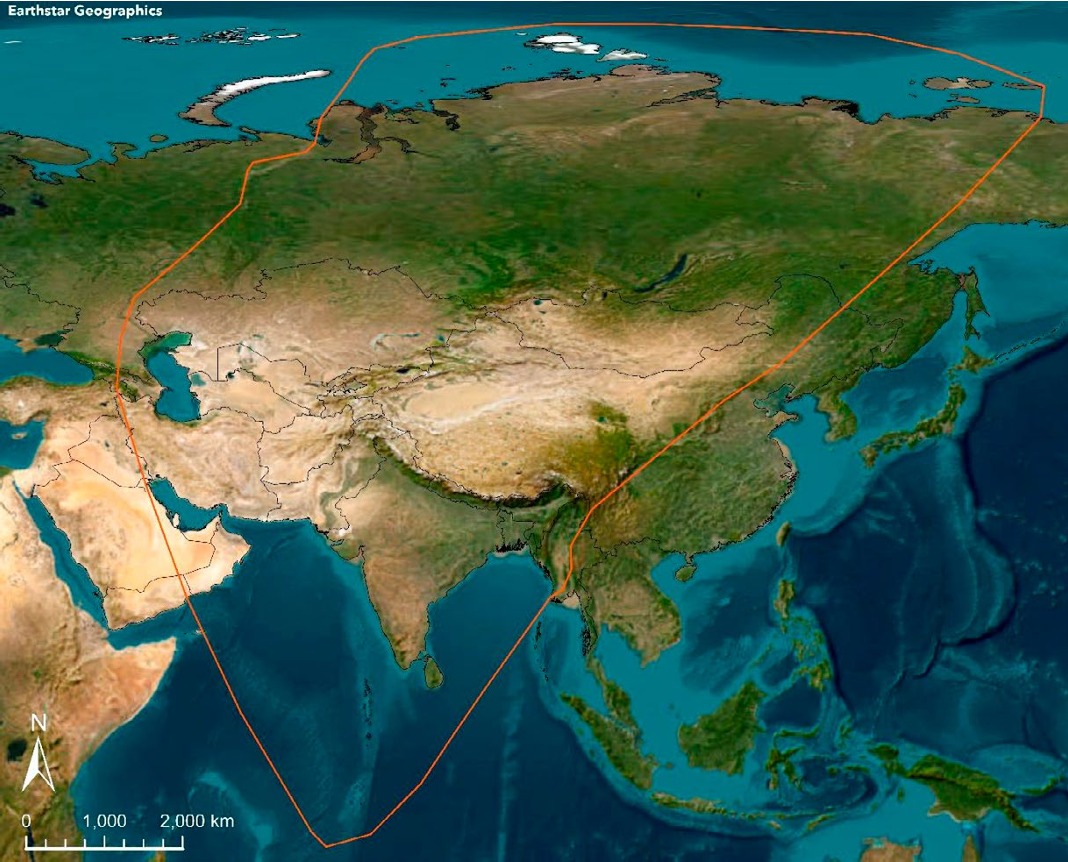
The CAF boundary for the CAF Situation Analysis report. The boundary is adapted from the CMS CAF Waterbird Action Plan (2006). The political boundaries on the map do not imply official endorsement or acceptance by BirdLife International or CMS.
Ratification Status
| Country | Status | Country ratification date | Notes |
|---|---|---|---|
| Afghanistan | Range State | ||
| Armenia | Range State | ||
| Azerbaijan | Range State | ||
| Bahrain | Range State | ||
| Bangladesh | Range State | ||
| Bhutan | Range State | ||
| China | Range State | ||
| Georgia | Range State | ||
| India | Range State | ||
| Iraq | Range State | ||
| Kazakhstan | Range State | ||
| Kuwait | Range State | ||
| Kyrgyzstan | Range State | ||
| Maldives | Range State | ||
| Mongolia | Range State | ||
| Myanmar | Range State | ||
| Nepal | Range State | ||
| Oman | Range State | ||
| Pakistan | Range State | ||
| Qatar | Range State |